Dimitri B. writes about online dating safety and modern scam tactics. With a background in international communication and psychology, he focuses on practical ways people can protect themselves in digital relationships. Originally from Ukraine, he now lives in Canada.
Anyone asking how to know if you are being scammed online dating in 2026 is asking a harder question than the same person would have asked five years ago. The old checklist, broken English, a blurry photo, a request for gift cards within the first week, still applies sometimes, but it is no longer the whole picture. The tools available to romance scammers now include AI generated photos, voice cloning, and in some cases real time video that can fool a casual glance.
This article is not here to suggest that everyone met through online dating is hiding something. Most people are exactly who they say they are. It exists to lay out the specific, observable patterns that separate a slow developing, honest connection from one being engineered for a payout, and to explain why some checks that used to work reliably no longer do.
The goal is not paranoia. It is being able to answer the question am I being romance scammed with something more concrete than a gut feeling, using signs that hold up under scrutiny.
What Changed Between an Old Scam and a 2026 Scam
The mechanics of a romance scam have not changed. Someone builds trust over weeks or months, then asks for money, often tied to a crisis that conveniently cannot be verified. What changed is the production quality behind it.
AI generated fake profiles now use photos that were never taken of a real person, which means a reverse image search can come back clean even when the profile is entirely synthetic. Voice cloning tools can recreate a convincing voice from a short audio sample. And in some documented cases, scammers have used real time face swapping software during video calls, so the caller’s face on screen does not belong to the caller.
None of this means detection is impossible. It means the checks that mattered most now involve behavior and consistency over time, not a single photo lookup or a single successful call.
The Pace of the Relationship Says More Than the Content Does
A pattern that shows up consistently in documented romance scam cases is speed. Declarations of true love, talk of a shared future, or references to marriage within days or a few weeks of first contact are common in cases later confirmed as fraud, and rare in relationships that develop naturally.
This is not because genuine connections cannot move fast. Some do. The distinction is what the intensity is paired with. When affection escalates quickly alongside a story that explains why the person cannot meet in person, cannot stay on a video chat for long, or works in a role that keeps them isolated from ordinary verification, that combination is the part worth paying attention to, not the affection on its own.
Every Excuse for Not Meeting Leads Back to the Same Place
Scammers tend to choose occupations and circumstances that make distance and unavailability sound reasonable rather than suspicious. Military deployment overseas, oil rig or offshore engineering work, international aid or medical missions, and cargo ship or maritime jobs appear repeatedly across reported cases, because each one plausibly explains restricted internet access, time zone gaps, and an inability to meet in person on short notice.
The pattern to notice is not any single excuse, since legitimate versions of all of these jobs exist. It is the accumulation. A person who cannot video chat because of a supposed deployment, then cannot make a phone call because of the same deployment, then needs money wired urgently because pay from that same deployment has been delayed, is stacking one unverifiable claim on top of another. Each piece alone might be plausible. Together, they form a structure built to prevent verification rather than explain a temporary inconvenience.
When the Video Call Doesn’t Quite Add Up
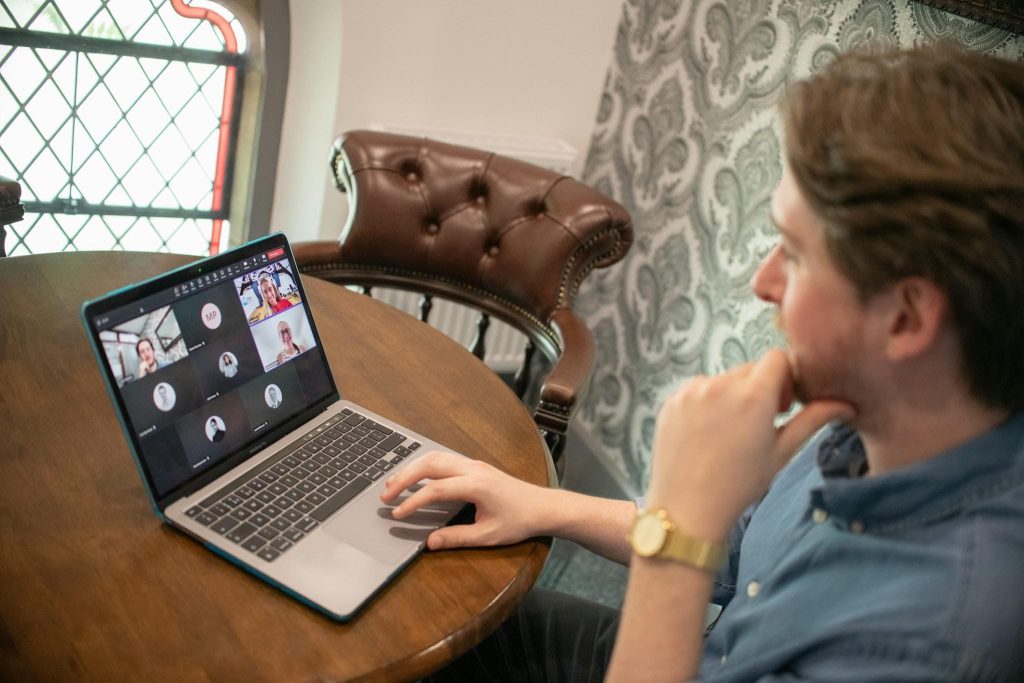
A live video call used to be close to definitive proof of identity. In 2026, it still helps, but it is no longer conclusive on its own, since real time face swapping tools exist and are being used in documented scam cases.
What still works is making the call harder to fake in the moment. Asking someone to turn their head fully to the side, hold up a specific number of fingers on request, or pick up an object nearby and describe it puts pressure on tools that struggle with unscripted, unpredictable movement. A call that is unusually short, keeps cutting out at the same moments, stays oddly low resolution, or shows lighting on the face that does not match the room behind them deserves more scrutiny, not less.
Repeated cancellations of a promised video call, each with a new technical excuse, is itself a pattern worth naming directly. One cancelled call happens. A pattern of them, stretched over weeks while the relationship keeps intensifying through text messages, is different.
The Money Conversation Rarely Starts With Money
Very few romance scammers open with a direct request for money. Most spend real time on rapport first, asking about family, work, and daily life, partly to build trust and partly to gather personal details that make later requests sound informed rather than generic.
The financial ask itself tends to arrive dressed as a medical emergency, a plane ticket needed to finally meet in person, a family member in crisis, or, increasingly, an investment opportunity the person claims is helping them build wealth and wants to include their new partner in. This last version deserves particular attention in 2026, since it borrows the emotional trust of a romance scam and combines it with the mechanics of a fraudulent investment platform, sometimes referred to as pig butchering, where victims are shown fabricated returns to encourage larger and larger transfers before the platform disappears entirely.
Requests to receive money, rather than send it, are their own category and worth flagging separately. A request to accept a transfer, forward it, or receive a plane ticket or package on someone else’s behalf usually signals involvement in money laundering rather than a legitimate favor, regardless of how the request is framed.
According to the FTC’s May 2026 consumer alert on imposter scam trends, reported losses to romance scams rose 22 percent, reaching a median loss of $2,020 per person, and separate FTC reporting notes that nearly 60 percent of romance scams in 2025 began on social media rather than dedicated dating apps, a shift that matters because social media platforms generally offer fewer built in verification tools than dating sites do.
Warning Signs Worth Tracking Together
No single item on this list proves a scam by itself. The combination, and how many boxes get checked within the first few weeks, is what matters.
Declarations of love, or talk of a shared future, within days of first contact
A stated occupation, such as military service overseas, offshore work, or an aid mission, that conveniently limits video calls, phone contact, or a face to face visit
Repeated cancellations of a promised video call, each with a different technical excuse
No candid, casual, or unposed photos, only polished images that look professionally taken
Quick pressure to move the conversation off the dating app or website and onto WhatsApp, Telegram, or text messages instead
Any request involving bank details, a wire transfer, gift cards, or cryptocurrency, however the request is framed
An unsolicited investment opportunity, especially one tied to cryptocurrency, presented as a way to help the other person financially
A request to receive money or a package on someone else’s behalf and forward it along
Vivid, detailed stories about hardship or crisis that consistently arrive right when trust has deepened enough to make a money request land
What a Reverse Image Search Can and Cannot Tell You Now
A reverse image search is still worth doing on every new match, since it remains effective against the large share of fake profiles built from stolen real photos, which is still the most common method in use. If the same photo turns up under a different name, a stock photo site, or an unrelated social media account, that result is close to conclusive.
What it cannot reliably catch anymore is a photo generated by AI specifically for that profile, since an image that was never posted anywhere else has nothing to match against. In that situation, the more useful checks shift to consistency over time: whether the person appears in any casual, unposed photos, whether their story stays consistent across separate conversations, and whether they tolerate the kind of unscripted verification, an unplanned video call, a specific requested gesture, a call to a phone number that a legitimate person overseas could plausibly still answer.
Trusting the Pattern, Not Just the Instinct
None of this means every slow, cautious, occasionally inconsistent online relationship is fraudulent. People get busy, connections lose and regain momentum, and legitimate long distance relationships involving a foreign country face real logistical friction that has nothing to do with fraud. The difference lies in whether unavailability, financial requests, and emotional intensity are moving together in a way that consistently avoids verification, or whether the relationship, imperfect as it may be, keeps giving honest answers when asked to.
Anyone who has reached the point of specifically wondering am I being scammed online dating already has enough signal to justify slowing down and asking harder questions, not waiting for doubt to resolve itself. If those questions raise more concern rather than less, Verified Love offers tools to check a profile, photos, and identity details, free to use, with no obligation attached.

 Français